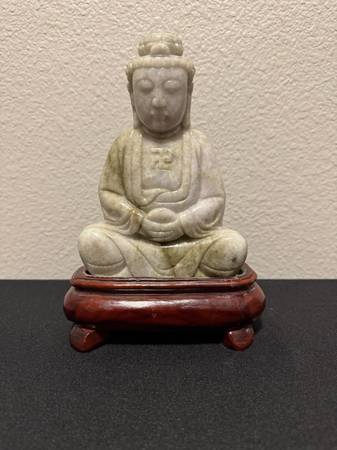
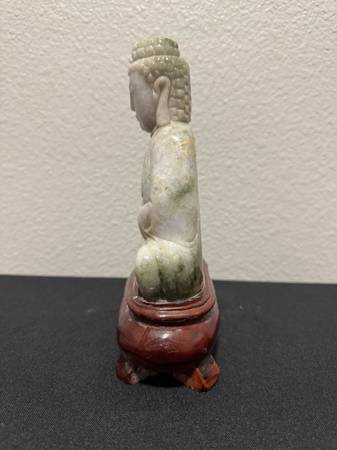
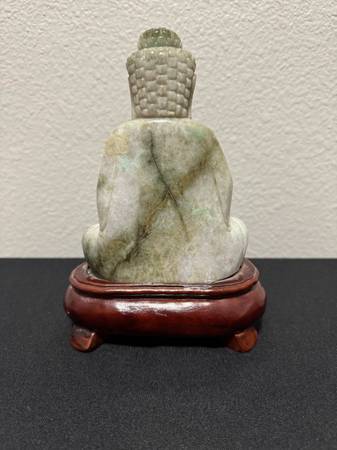
The figure is seated in a meditative posture with hands in its lap, known as the dhyana or meditation mudra. It appears to be carved from a single piece of light-colored, possibly white or celadon (pale green) jade, which has some natural variations and inclusions giving it the greenish/grey hue. On the Buddha's chest is a symbol that resembles a swastika. In Buddhism, this symbol (known as manji in Japanese or wan in Chinese) has a positive and auspicious meaning, representing the auspicious footprints of the Buddha, good fortune, and eternal cycling. It is considered the "seal of Buddha's heart" in some traditions. This symbol is an ancient one and is not related to the tilted, counter-clockwise symbol later adopted by the Nazi party. The statue is displayed on a fitted, dark-colored (likely rosewood or ebony) wooden base, which is a common way to present such Chinese carvings.